
Direct answer
Should a small business use Google Ads or Facebook Ads?
Use Google Ads when people are already searching for the product, service, or problem you solve. Use Facebook and Instagram ads when you need to create demand, demonstrate the offer visually, reach defined audiences, or retarget previous visitors. Many businesses use both, but each campaign needs a distinct role.
| Decision factor | Google Ads | Facebook/Instagram Ads |
|---|---|---|
| Strongest starting point | Existing search demand | Audience discovery and demand creation |
| Primary input | Keywords, intent and landing relevance | Audience, offer and creative |
| Creative requirement | Concise copy plus useful landing page | Strong visual or video variations |
| Best shared rule | Measure qualified outcomes, not clicks alone | |
Platform references: Google Ads Help and Meta Business Help Center.
Google Ads vs Facebook ads for small business is not a question of spending more everywhere.
Quick answer: Google Ads vs Facebook ads for small business
Use Google Ads when buyers are already searching for a service and need a solution soon. Use Facebook Ads when the business needs to create demand, educate the market, retarget visitors, or show a visual offer.
TLDR
- Google Ads usually captures active demand.
- Facebook Ads usually creates or reminds demand.
- Urgent local services often fit search first.
- Visual ecommerce offers often fit social testing.
- The best choice depends on lead quality and follow-up capacity.
The channel question is really an intent question
Small business owners often ask which ad platform is better. The sharper question is: how does the customer behave before buying? A person searching for an urgent local service is in a different state of mind from someone casually discovering a product in a feed.
Google Ads can be useful when the buyer already knows the problem and is searching for a provider. Facebook Ads can be useful when the buyer needs to see the problem, compare options, or remember the brand later.
Neither channel fixes weak positioning. The channel should match the buyer journey.
When Google Ads has the advantage
Google Ads tends to make sense when people search with intent: emergency services, professional services, local clinics, repairs, bookings, and quote-based decisions. In those cases, the business may not need to create demand from zero. It needs to be visible when the search happens.
For local businesses, search visibility also depends on accurate business information. Google’s Business Profile guidance emphasizes keeping business details clear so customers can find and contact the business.
If search demand exists and the landing page answers the buyer’s question, Google Ads can create cleaner tests for lead intent.
When Facebook Ads has the advantage
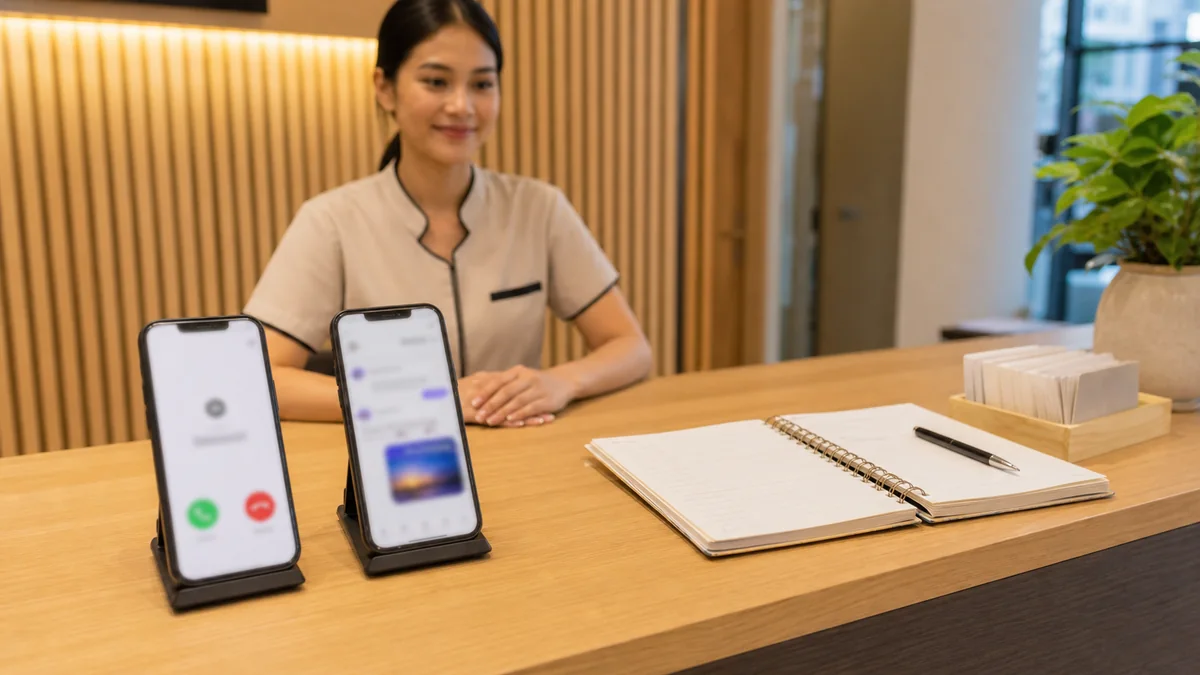
Facebook Ads tends to be stronger when the offer is visual, emotional, educational, or new to the market. Ecommerce products, service packages, events, and retargeting campaigns can benefit from feed-based discovery.
The risk is that engagement can look successful while sales remain weak. A post can get comments without producing qualified leads. That is why the campaign must be judged by conversations, inquiries, and buyers, not attention alone.

How to decide with a small budget
Choose Google first if customers already search for the service and the business can answer calls or forms quickly. Choose Facebook first if the offer needs demonstration, comparison, or retargeting.
If budget allows, use one channel as the main test and the other as support. For example, use search to capture urgent demand while using social content to build trust before and after the search.
Run the channel that matches the buying moment
Google Ads is usually the cleaner test when people already search for the service and the business can name the high-intent query. Facebook Ads is more useful when the offer needs demonstration, visual proof, or repeated exposure before a buyer searches for it directly.
For a small budget, splitting money evenly across both platforms often produces weak evidence. Choose the channel with the strongest intent match, define the conversion event, and run long enough to observe lead quality. Add the second channel only when it has a different job, such as retargeting visitors or creating demand for a service people do not yet describe consistently.
Compare channels with business evidence
- Cost per qualified enquiry, not only cost per click.
- Conversion rate of the page used by each campaign.
- Time required to follow up and close the lead.
- Revenue potential and fit of the customers produced.
How Rightjob Solutions can help
Rightjob Solutions supports businesses with Digital Marketing, Book a consultation, Marketing ROI, Zero-Click Search.
Useful source
For platform and measurement context, review Google Business Profile guidance.
FAQs
Which is cheaper, Google Ads or Facebook Ads?
Cost depends on industry, competition, targeting, creative, and conversion path. Cheap clicks are not useful if they do not become qualified inquiries.
Which is better for local leads?
Google Ads often fits high-intent local searches, while Facebook Ads can help with awareness, retargeting, and visual offers.
Can I run both?
Yes, but small businesses should avoid splitting the budget too thin. Start with one primary goal and measure lead quality.
Conclusion
The best digital marketing plan is not the loudest one. It is the one a business can understand, measure, and improve. If you want a practical plan for your next move, book a consultation with Rightjob Solutions.