Estimated reading time: 4 minutes
In the modern digital economy, visibility is the primary currency. However, the methods used to achieve that visibility are often misunderstood. The most common point of confusion is the distinction between Search Engine Optimization (SEO) and Search Engine Marketing (SEM). While both aim to put a brand in front of potential customers, they operate on different timelines, budgets, and technical frameworks.
For a business navigating the complexities of the 2026 landscape, knowing when to invest in each is critical. A balanced strategy ensures that a brand remains visible today while building a permanent foundation for the future.
Quick Answer: Should you choose SEO or SEM?
Choose SEO when you need durable organic visibility and can invest in useful content, technical improvements, and authority over time. Choose SEM when you need controlled, immediate exposure for a tested offer and can fund both clicks and conversion tracking. Many businesses use SEM for near-term demand while SEO builds a longer-term acquisition channel.
TLDR: The Search Breakdown
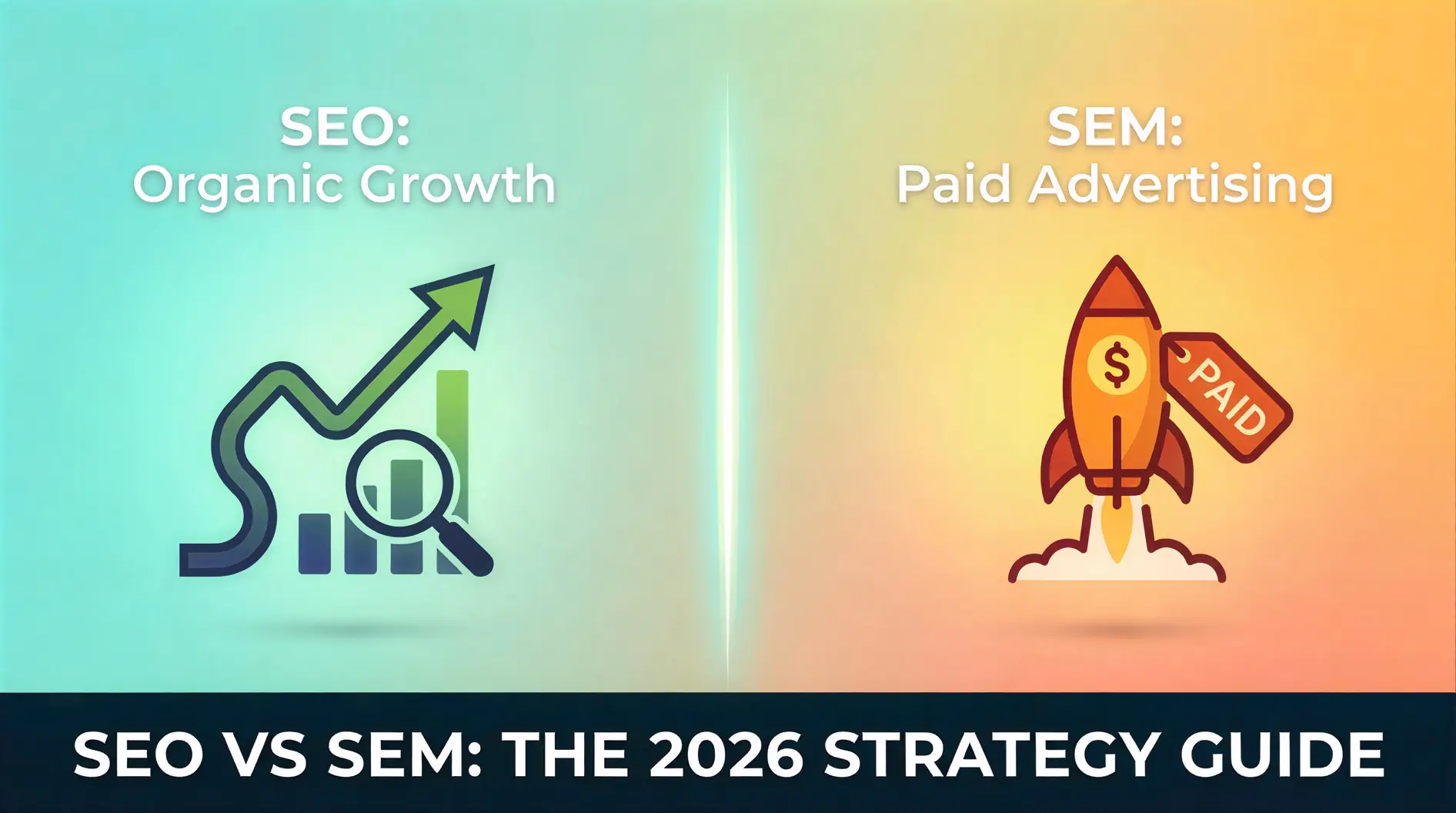
- SEO (Organic): The long term process of earning a high ranking through content quality, technical structure, and trust.
- SEM (Paid): The immediate process of buying a top spot through a bidding system like Google Ads.
- The Comparison: SEO is about building an asset; SEM is about renting a spotlight.
- The Synergy: The most successful brands use SEM to test ideas and SEO to sustain the results.
What is Search Engine Optimization (SEO)?
SEO is the art and science of making a website more attractive to search engines without paying for placement. This involves optimizing the site for speed, mobile responsiveness, and high quality content. In 2026, this has evolved into a multi-layered discipline.
Modern success requires a deep understanding of the differences between SEO, GEO, and AEO. It is no longer enough to just rank on a results page. Content must also be optimized for AI generative engines and answer boxes. This foundation of E-E-A-T (Experience, Expertise, Authoritativeness, and Trustworthiness) is what allows a brand to earn a permanent place at the top of the search results.
What is Search Engine Marketing (SEM)?
SEM refers to the use of paid advertising to appear on search engine results pages. It typically operates on a Pay-Per-Click (PPC) model. This means a business only pays when a user actually interacts with their ad. SEM is an “on-demand” traffic source. It is ideal for product launches, time-sensitive promotions, or new businesses that need immediate traction while their organic authority grows.
Because it provides instant data, SEM is often used to combat the rise of zero-click search. When AI summaries provide answers directly on the page, a paid ad can ensure that a brand still captures the user’s eye. This speed makes SEM a powerful tool for testing which personal branding messages resonate best with a target audience before committing to a long term content plan.

Key Differences: Speed vs Sustainability
The most obvious difference is the time required to see results. SEM can be launched in hours and drive traffic within minutes. In contrast, SEO is a “slow burn” that may take months to reach its peak. However, once an SEO ranking is achieved, the traffic is essentially free.
The nature of the traffic also differs. Organic search results are often seen as more trustworthy by users. Building this trust requires a commitment to backlinking and high-level content creation. While SEM is effective for driving “transactional” traffic from people ready to buy, SEO is superior for building a loyal community and long term brand authority.
How RightJob Solutions Integrates Both
At RightJob Solutions, the focus is not on choosing one over the other. The goal is integration. A business uses SEM to gain immediate market data and fill the sales pipeline. That data is then used to refine the SEO strategy. By knowing exactly which keywords people are paying to click on, the team can create organic content that is guaranteed to be relevant.
This integrated approach is essential during major global shifts, such as the Chinese New Year vs Lunar New Year season. During these high traffic periods, a brand might use SEM to capture the seasonal surge while using SEO to maintain its position as a cultural authority.
Conclusion
SEO and SEM are two sides of the same coin. One builds the value of the business while the other accelerates its reach. In 2026, relying solely on one method is a risk. A sustainable digital presence requires the speed of SEM to stay competitive and the authority of SEO to stay relevant. By mastering both, a brand ensures that no matter how the search engines change, its voice will always be heard.
In an era of increasing privacy, the most successful brands are shifting their focus to What is zero-party data to build deeper, more personal connections with their audience.
This data becomes incredibly powerful when applied to major events, such as navigating the nuances of the Chinese New Year vs Lunar New Year impact on global consumer behavior.
Let’s clear the path for your business success in 2026. View Our Services | Chat with us today for a free consultation
A practical SEO and SEM budget decision
A local service business with a new landing page might use a tightly scoped search campaign to test whether a specific service and location generate qualified enquiries. It should track calls or form submissions, not clicks alone. At the same time, the business can improve its service page and publish answers to recurring customer questions. Paid traffic supplies near-term evidence; SEO builds pages that can keep helping after an advertising test ends.
An ecommerce business may make a different choice. Search ads can support a time-sensitive product launch, while SEO is better suited to durable category guidance, product comparisons, and technical improvements. In either case, budget for the destination page, measurement, and follow-up as well as the search channel.
Google’s SEO Starter Guide explains the foundations of helping search engines understand content. For paid campaigns, use the official Google Ads conversion measurement guidance to define the action the campaign should produce.
Frequently Asked Questions
Which works faster, SEO or SEM?
SEM can begin generating visits after a campaign is approved and launched, but useful results still depend on targeting, the offer, the landing page, and measurement. SEO usually needs more time because pages must be crawled, understood, and judged useful and trustworthy.
How should a small business split its search budget?
There is no universal percentage. Protect the essentials first: a credible landing page, conversion tracking, and prompt lead follow-up. Use paid search only at a level the business can test responsibly, while funding SEO work tied to persistent customer questions and services.
Can SEO and SEM use the same keywords?
They can address the same customer need, but the wording and page should match the intent. Paid-search query data may reveal language worth investigating for organic content, although an ad click does not prove that a page will rank organically.
What should be measured for each channel?
For both, measure qualified enquiries, sales, or another meaningful business action. Paid search also needs spend and cost-per-conversion data. SEO needs organic visibility, clicks, landing-page engagement, conversions, and changes over a suitable time period.