

Estimated reading time: 4 minutes
The definition of AI automation has shifted significantly as the global market enters the second quarter of 2026. While previous iterations focused on simple, rule-based tasks, modern AI automation refers to the use of autonomous systems that can reason, plan, and execute entire business processes without constant human intervention.
Businesses are moving from isolated AI experiments toward narrower operational workflows. The value of that shift depends on process fit, reliable data, appropriate controls, and evidence from the business’s own pilot.
Quick Answer: What is AI automation for business?
AI automation uses software to interpret information, recommend or take defined actions, and move work through a repeatable process. Start with a narrow, low-risk workflow such as sorting enquiries for staff review. Set access limits, privacy rules, exception handling, and a human approval point before expanding it.
AI automation is not necessary for every process. It is most useful when a business can define the work, supervise exceptions, protect the data involved, and compare the result with a clear baseline.
TLDR: The 2026 Automation Snapshot
- The Core Definition: Software that uses AI within a defined workflow to interpret information and support or take approved actions.
- Best Starting Point: A frequent, low-risk workflow with clear inputs, outputs, and exceptions.
- Business Case: Compare the pilot’s total cost with measured time, quality, response, or revenue outcomes.
- Control: Keep human review and a fallback path wherever an error could have a material effect.
AI Adoption by Business Function
In 2026, automation has matured beyond customer-facing applications into core operational areas. The following table illustrates the current adoption rates across different business departments
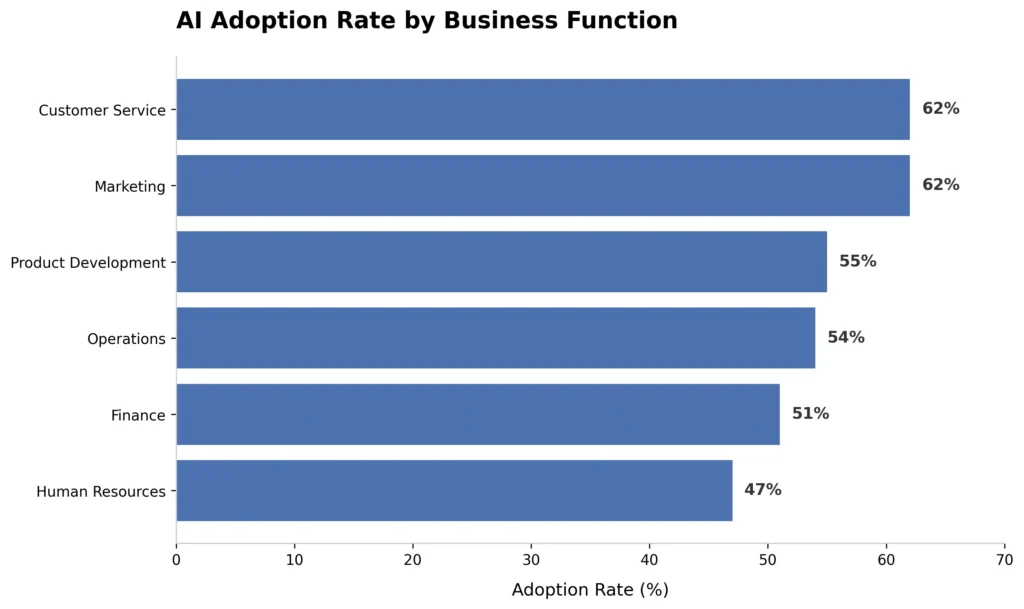
This data shows that marketing and customer service remain the leaders in adoption, but operational functions are rapidly catching up as AI automation and agentic workflows become more reliable.
Reclaiming Time: The Impact on Personnel
The primary value of AI automation is the reclamation of human time. By offloading the coordination load of daily tasks to digital systems, personnel can focus on high-value strategy. The amount of time saved varies by role, as shown in the following data:
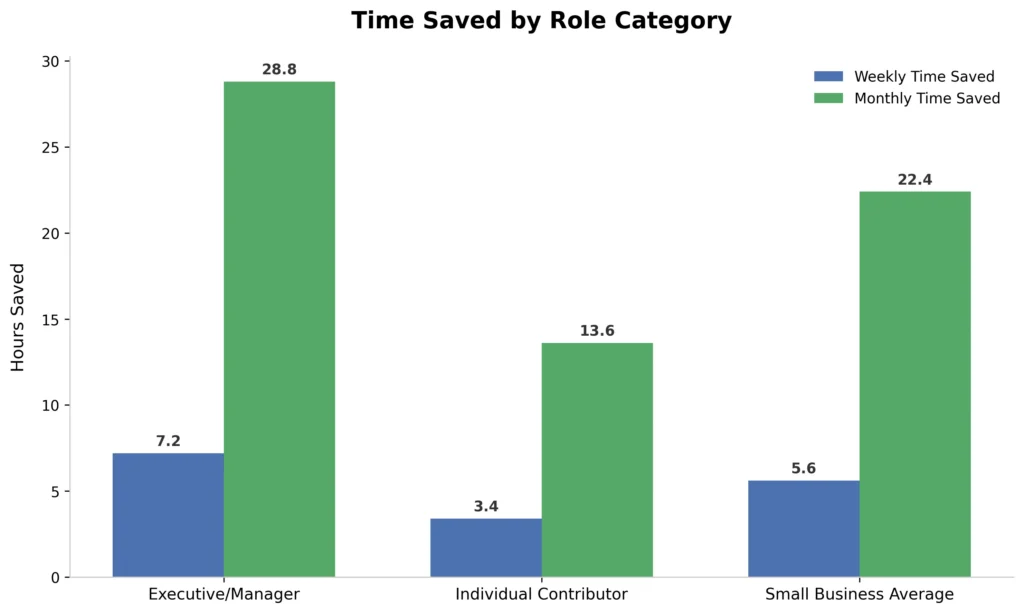
These reclaimed hours allow leadership to focus on critical initiatives such as Personal branding for SEO and building a strong Virtual presence.
Precision in Marketing and Discovery
AI automation also helps manage the complex Differences between SEO, GEO, and AEO. By automatically structuring data and optimizing content for answer engines, businesses ensure they remain visible as search behavior evolves.
AI-assisted sales workflows should be evaluated against the business’s own baseline and reviewed for false positives, missed leads, and staff effort:
- Lead quality: Check whether routed enquiries meet the team’s agreed qualification criteria.
- Response time: Compare the time from enquiry to a useful, reviewed response.
- Review effort: Track corrections and exceptions as well as successful automated steps.
This technical precision is often considered the Backlinking secret sauce for 2026. It maintains site health and authority signals without manual labor, ensuring high E-E-A-T rankings
The Role of RightJob Solutions
Successfully deploying AI automation requires a combination of technical IT expertise and strategic vision. RightJob Solutions assists businesses in identifying the specific workflows that will yield the highest ROI. The agency focuses on building resilient systems that integrate seamlessly with existing CRM and ERP platforms while maintaining a secure Sovereign cloud and data privacy framework.
By providing professional technical consulting and skilled virtual support, RightJob Solutions ensures that its clients do not fall victim to the high failure rate associated with unguided AI pilots. This comprehensive approach to digital strategy is why the firm is regarded as the Best digital marketing agency in the Philippines. The team provides the technical foundation needed to turn AI from a buzzword into a measurable financial asset.
Conclusion
AI automation should be judged by measurable business outcomes and the risks introduced by the workflow. The case for adoption is strong only when a controlled pilot performs better than the existing process.
A sensible next step is to document one process, test a limited workflow, and review its exceptions with the people who do the work. Automation should expand because the evidence supports it, not because the technology is fashionable.
As digital boundaries shift, businesses must prioritize local control and security by understanding the role of Sovereign cloud data privacy in protecting sensitive information.
Automation is most useful when a documented trigger, bounded task, human review point, and measurable result are already clear.
Let’s clear the path for your business success in 2026. View Our Services | Chat with us today for a free consultation
Start with one bounded workflow
Consider a small service business receiving enquiries by email and web form. An AI-assisted workflow could extract the service requested, flag missing details, and draft a routing suggestion. A staff member reviews the suggestion before the enquiry enters the CRM. The automation should not make pricing promises, discard unusual requests, or expose sensitive information to an unapproved tool.
Before launch, define the owner of the process, the data the system may access, the actions it may take, and the cases that must stop for human review. Compare the pilot against a baseline such as handling time, routing accuracy, rework, or qualified-response time. Expand only when the evidence and controls support it.
The NIST AI Risk Management Framework is a primary reference for managing AI risks. Its emphasis on governance, measurement, and ongoing management is useful when a business is deciding where automation needs oversight.
Frequently Asked Questions
Which workflows are suitable for AI automation?
Start with frequent, clearly defined work where inputs and exceptions can be reviewed. Classification, summarisation, draft preparation, and routing are often easier to test safely than decisions involving payments, legal commitments, employment, or sensitive customer outcomes.
Where should a human stay involved?
Keep human review where an error could materially affect a customer, employee, payment, commitment, or regulated decision. People should also handle unusual cases and have authority to pause or override the system.
How should a business protect privacy?
Minimise the data sent to a tool, confirm how the provider stores and uses it, restrict access, and document retention and deletion rules. Sensitive data should not enter an AI workflow until the business has approved the system and its controls.
How do you measure an AI automation pilot?
Choose a baseline and a small set of operational measures before launch. Useful measures can include handling time, error or rework rate, exception volume, response time, and staff review effort. Include failures and corrections rather than reporting only successful runs.