
Direct comparison
How does content marketing compare with social media marketing in 2026?
Content marketing creates durable assets—such as guides, videos, case studies, and landing pages—that attract and educate an audience over time. Social media marketing distributes ideas, starts conversations, and builds attention on platforms where reach can change quickly. The strongest strategy uses content as the source and social media as a distribution and feedback system.
| Factor | Content marketing | Social media marketing |
|---|---|---|
| Primary role | Educate and build demand | Distribute and engage |
| Typical lifespan | Months or years | Hours or days |
| Best measurement | Qualified traffic, leads, assisted conversions | Reach, engagement, referrals, conversations |
Connect the two with Rightjob’s digital marketing, social media management, and video editing services.
Estimated reading time: 6 minutes
Content marketing vs social media marketing is a practical distinction: one creates useful assets that answer buyer questions; the other distributes those ideas and makes conversation possible. Philippine businesses should connect both to a clear customer decision and a route to enquiry.
A useful guide may keep helping customers after a social post loses attention, while a social conversation can reveal the next question a guide should answer. Neither channel guarantees qualified enquiries; the offer, distribution, website, and follow-up still matter.
Quick Answer
Content strategy decides what useful ideas a business should create, who they are for, and how they support a customer decision. Social media distribution decides where, when, and in what format those ideas reach people. Treating the two as the same often produces a busy posting calendar without a durable library of helpful content or a clear path to enquiry.
TLDR: The Dual Power of Creation and Distribution
- Content Marketing: The creation of valuable, educational, or entertaining material to solve problems for the audience.
- Social Media Marketing: The use of social platforms to distribute that content, engage in real-time conversations, and build brand loyalty.
- The Synergy: Content provides the “why” for people to follow a brand, while social media provides the “where” for those interactions to happen.
- The Result: A coordinated approach that can build familiarity and guide qualified people toward a relevant next step.
What is Content Marketing?
Content marketing is a strategic approach focused on creating and distributing valuable, relevant, and consistent material to attract a clearly defined audience. Unlike Traditional marketing that relies on interrupting the consumer with a sales pitch, content marketing focuses on providing real value before asking for a transaction.
In the modern era, content is the primary way a business builds a relationship with its customers. It involves answering the questions of the audience through blog posts, videos, podcasts, and infographics. The goal is to drive profitable customer action by establishing the brand as a helpful and authoritative resource. By consistently delivering high-quality information, a business earns the right to present its products and services as the natural solution to the problems of the user.
This approach is deeply tied to the concept of E-E-A-T, which stands for Experience, Expertise, Authoritativeness, and Trustworthiness. High-quality content is the most effective way to prove these qualities to both human readers and AI search engines.
What is Social Media Marketing?
If content marketing is the engine, social media marketing is the fuel that moves it forward. Social media marketing is the practice of using platforms like LinkedIn, Instagram, TikTok, and Facebook to connect with an audience to build a brand, increase sales, and drive website traffic. It involves much more than just posting updates. It is about community management, active listening, and participating in the global conversation.
In 2026, social media marketing has evolved into a sophisticated tool for “Social SEO.” This means that platforms are being used as search engines themselves. Users are searching for brands on TikTok and Reddit to find honest reviews and real-time updates. A successful social media strategy involves creating platform-specific content that encourages shares, comments, and direct interaction.
Furthermore, social media is the primary channel for Personal branding for SEO. It allows the leaders of a business to show their human side, share their expertise, and build the “Entity Authority” that modern algorithms require. It is the place where a brand transitions from a logo into a living, breathing personality that the audience can trust.
Why Content and Social Media Need Each Other
A common mistake in digital strategy is treating these two topics as separate silos. However, content without social media is a library with no visitors. Social media without content is a megaphone with nothing to say. The true power of RightJob Solutions lies in integrating these two forces.
1. Amplifying Reach and Authority
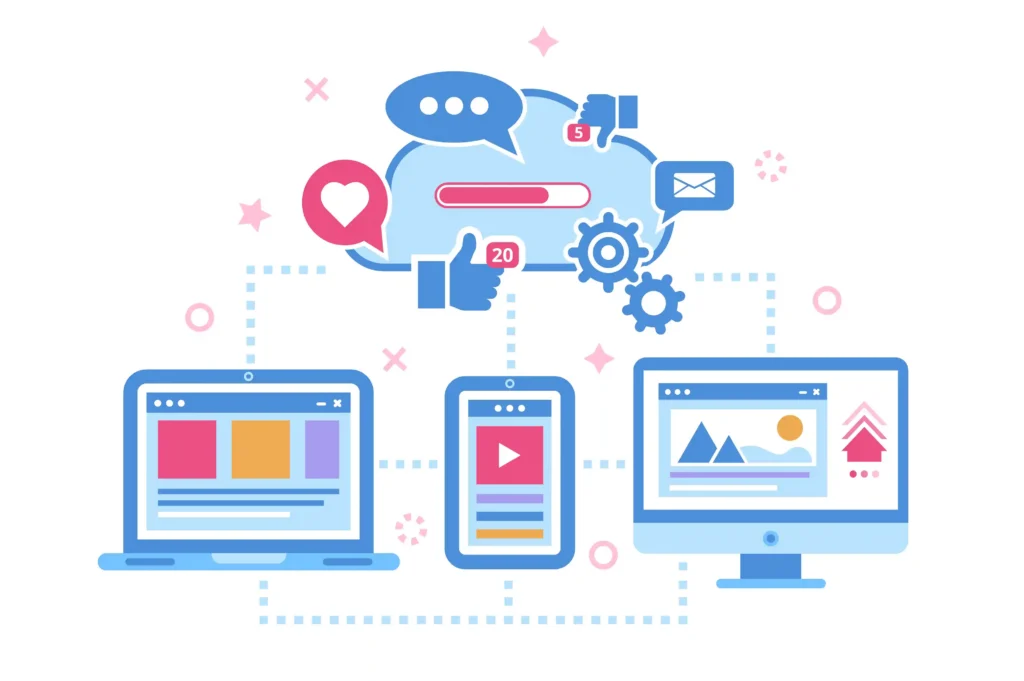
Content provides the substance that justifies a social media presence. When a brand shares a deep-dive article on The differences between SEO, GEO, and AEO, it gives the social media audience a reason to engage. This engagement signals to search engines that the content is valuable, which in turn helps it rank higher. This creates a feedback loop that strengthens the overall digital footprint.
2. Navigating the AI and Zero-Click Landscape
As the market shifts toward Zero-click search, social media becomes even more important. When AI engines provide answers directly on the search page, users may not click through to a website. However, they will often head to social media to see if the brand is active and reputable. Social media serves as the “trust verification” layer for information found through AI assistants.
3. Gathering Real-Time Insights
Polls, questions, comments, and reviews can reveal recurring buyer concerns, but they are not all the same as zero-party data. Review the context before interpreting tone or treating a few responses as representative. Our social listening and sentiment analysis guide explains a practical routine for turning feedback into a clearer answer or service improvement.
4. Sustaining Seasonal Momentum
Strategic integration allows a brand to handle seasonal shifts effectively. For example, during the Lunar New Year, a business can use social media to share festive content while using content marketing to explain the deeper business impacts of the holiday. This dual approach ensures the brand is both culturally relevant and professionally authoritative.
The Role of RightJob Solutions
Managing both content and social media requires a significant amount of time, technical skill, and creative energy. RightJob Solutions bridges this gap by offering comprehensive services that cover the entire lifecycle of a digital presence. From crafting high-authority Backlinking strategies to managing daily social media interactions, the agency ensures that every digital move is calculated for growth.
By understanding the Difference between SEO and SEM, RightJob Solutions helps businesses decide when to push for organic content growth and when to accelerate visibility through paid social media ads. This balanced approach turns a simple digital presence into a dominant market force.
Build for an owned destination, then distribute deliberately
A useful article, guide, service page, or email resource gives the business an owned destination that can keep answering a customer question. Social posts can introduce one idea from that resource, adapt it to the conventions of a platform, and direct interested readers toward the next useful step. This is more resilient than placing the entire strategy inside a platform feed.
Google’s people-first content guidance recommends creating material for an intended audience and helping readers achieve their goal. That is a useful editorial test for both an owned article and the social posts derived from it; it does not guarantee rankings or distribution.
FAQs about content and social media marketing
Should a business start with content strategy or social media?
Start with the audience question and the business goal, then decide which content deserves an owned home and which social channels can distribute it. Opening accounts everywhere before making that decision usually creates more maintenance than insight.
How often should a small business post on social media?
Use a cadence the team can sustain without lowering quality or ignoring responses. A smaller schedule with useful posts, timely replies, and consistent review is preferable to daily publishing that has no clear purpose.
Can one piece of content be reused across several channels?
Yes, but adapt the idea instead of copying the same post everywhere. A detailed guide might become a short demonstration, a visual checklist, a customer question, and an email note, with each version written for its channel.
How should content and social media performance be measured?
Measure each asset according to its job. Reach and engagement can show distribution, while qualified visits, email sign-ups, enquiries, and assisted conversions show whether the work helped people take a meaningful next step.
Conclusion
Content marketing and social media marketing are the two halves of a successful 2026 business strategy. One provides the value that builds trust, while the other provides the engagement that builds community. In an era of rapid AI transformation and changing search behaviors, the businesses that succeed are those that can tell a compelling story and stay active in the conversation.
It is time to move beyond the “shouting” of traditional ads and move toward a strategy of helping and connecting. By mastering the synergy between content and social media, a brand secures its future as a trusted, authoritative, and indispensable leader in its industry.
To truly scale a brand in today’s landscape, it is essential to understand the core Digital marketing vs traditional marketing difference and where to focus your budget for the best results.
To build a truly sustainable online presence, you must understand the strategic Difference between SEO and SEM and how to use both to dominate the search results.
Let’s clear the path for your business success in 2026. View Our Services | Chat with us today for a free consultation